Tag Archives: Change
The Problem With MEN

The Problem With MEN

20100601-father-hugging-young-son-600x411Working with leaders around the country and in Asia and Australia over the last 10 years, I’ve observed that people tend to be “comfortable” when their momentary emotional needs (MEN—and that acronym is not an accident!) are taken care of. Sometimes we even interpret this as being happy. But often people ask for my help because they want to stop some habitual dysfunction and I discover that they are truly comfortable when operating in that manner. Comfortable, but obviously not happy, or my help wouldn’t be required. So what’s really going on here? 

The Knower/Judger raises its ugly head once more

Somewhere in your youth (and sometimes later, but most of the K/J is developed in earlier life), you made a decision. Maybe you decided that yelling at people gets them to do what you want. When Dad yelled at me, I did what he wanted. Voila! That’s the rule! 

So a situation arises and someone who works with you does something unexpected and potentially detrimental to your mission—and you yell at him. No problem, right? It’s how you get people to do what they’re supposed to do. It’s your K/J rule. Your role here feels totally comfortable. The direct report slinks back to his desk and does as ordered. Of course, there is the matter of the relationship having suffered as a result of the interaction…

Another example. Your son calls a tornado a portado. He got it wrong. You immediately correct him. It’s your job. You’re the parent. K/J rule. But he’s now certain he’s the little person in the room and you’re the big one. You’re comfortable with him realizing he’s wrong…but are you happy?

Are there other ways we could respond in these types of scenarios that might lead to feeling happy? What if your direct report were treated as and felt like your co-driver (and that’s a whole nother article, but it means your totally-trusted-got-your-back-would-take-a-bullet-for-you wingman). That would be a game changer in how you lead the mission. Happy!

And getting a hug and “I love you, Dad” from a little boy who feels confident would make you sleep like a baby tonight. Happy!

So, at least in some situations, comfortable doesn’t support happy.

How MEN cause trouble

When we have emotional needs crying out to be met in the moment—MEN—and we choose to meet them instead of looking at what we want in the big picture, we end up comfortable, but not happy. Passing on the MEN in support of the big picture can support our long-term happiness but leave us uncomfortable.

Doing the comfortable thing is automatic unless you recognize this. The comfortable course of action defines us. It comes straight out of our K/J, happens when we’re on autopilot, and keeps us feeling warm and fuzzy…at least for the moment. Sometimes we don’t even see the trail of destruction it can leave behind. Or we do and we don’t know how we can change. Or we do and we hire Kim and hope he can change us.

Making the change that leads to happiness

Once we start to recognize that there is a big picture, we’ve opened Pandora’s box. Now we begin to see how our comfortable response can be dysfunctional within the big picture. Now we can develop a feeling about that response.

Perhaps some of you have done the palm-to-forehead move and muttered something like “Damn! I wish I hadn’t said that.” Congratulations. You’re on your way! You’ve just practiced condemning that feeling of comfort you used to feel when you won the shoving contest and/or proved your kid wrong. And once you’ve decided you don’t like that feeling…you can change it.

You might have to start by acknowledging you did it again and forgiving yourself. My experience is that early on we can get mad at ourselves for continuing. Failing to acknowledge and forgive forces us to go back into the “comfort zone” where, unless one goes through this exercise again, change becomes pretty inaccessible. It’s not unlike an addiction. The alcoholic is only comfortable when he’s met his MEN, and so are the rest of us.

Acknowledge. Forgive. Change the feeling. Be willing to put up with discomfort in favor of the big picture. Change your life.

Share
Pain and the Patella: Change from Within

Pain and the Patella: Change from Within

20111118_babyWhy do we ever change anything? Because we want to. There really is no other reason. The question is, how do we develop the desire to change anything? This story of a frustrated baby (who would grow up to use the story in his newsletter…) and his response to recurring pain in the patella, or kneecap, explains it all.

The year was 1947. A small boy had mastered high-speed crawling. (Rallyists show promise at an early age.) My home had well-worn and well-loved hardwood floors, and I would fly around the dining room, the hallway, my parents’ bedroom, and another room we called the den with tremendous grace and style. But I would not go into the living room. Why? There was an obnoxious oak door saddle in the archway that would pound my knees as I thumped over it. I was not equipped with the suspension needed to traverse this rough patch without doing damage.

So I avoided that room. There was nothing of interest in there anyway. Chairs. Lamps. No TV. There was an old wooden radio, but if no one was in there, it wasn’t on.

But when Pop came home and Mom was cooking dinner, Pop would plop down in his easy chair in that living room (I still have the chair), and now there was something of interest…Pop!

I would put the old butt in gear and head for that painful obstacle, thump my knees, and start crying, which worked—at first—’cuz Pop would come pick me up. You younger parents recognize this ploy.

Eventually Pop got tired of comforting me and schlepping me over to his easy chair and left me to my own devices. Thump, thump, cry, cry, cry, crawl over to the easy chair. Repeat on Tuesday, Wednesday, Thursday, and Friday.

Then one day out of sheer frustration at the pain in my black-and-blue knees, I rocket-crawled over to the archway, stood up, took two halting steps over the door saddle and fell back down for the final crawl to the chair. Those were my first steps ever, and they were totally unassisted. In fact, Pop barely caught the action, looking over his newspaper. Mom missed it entirely.

But here’s my point. Not until I was incredibly frustrated at the pain I had to endure to get to my father did I make a change, take a risk, rearrange my world for the better.

Using frustration to your advantage

This dynamic is at the core of every change you or I will ever make. It’s the positive that comes out of frustration. We’re frustrated because we’re not getting/achieving/accomplishing what our Knower/Judger says we’re supposed to. We don’t want to feel that frustration any longer. We change something.

We can also use frustration to change the source of the frustration—expectation. Without an expectation, there’s no reason for frustration. So every time you find yourself feeling extremely frustrated, you have two choices, and both are valid:

A. You can manage (lower) your expectations so that the comparison of what’s expected to what’s going on isn’t so different, and the result is not judged so negatively.

B. You can change something.

There are certainly situations where simply lowering your expectations in lieu of making drastic changes makes sense. Look at your expectations for your kids, for example. We all have fantastic expectations for our kids (Harvard, NBA, NASA scientist, etc.). But they have something to say about their lives, much more than we do, and there’s not a lot we can do about it. Drop the expectation, and frustration disappears.

But in situations where expectations are more or less dictated by job descriptions, health issues, etc., changing is the only way to lower frustration. And you’ll only make changes when you want to.

Here’s my next point. Either of these solutions to high frustration levels is totally internal. Made by you.

By this stage of your life, you’ve most likely tried to order the other person to perform at a level that doesn’t frustrate you. It’s a Dr. Phil moment. “How’s that workin’ for ya?” My guess is, about as well as my demanding that Pop move his easy chair to the dining room would have worked.

So what’s left? Let it go. Lower your expectation. Change your routine to adapt to the reality of what’s going on. Like my infant self, you might find yourself rising to an entirely new level of skill and experience.

 dad

Share
Why 99% of the Decisions We Make Aren’t Really Decisions

Why 99% of the Decisions We Make Aren’t Really Decisions

Are we creatures of habit or blessed with free will? I believe the former. Each of us makes thousands of decisions, but the vast majority of them aren’t really choices. Does this mean there is no free will? No, but making a real choice requires understanding some complicated concepts.

For my entire life, I have answered yes when asked whether I want fries with that. Each time I decided to have fries, I drew on the data I had stored over the years. I love fries, past experience has told me that they will make me happy, and I know that fries now and again are not going to cause me to pack on the pounds.

Then the rules changed. My metabolism slowed to a pace that can no longer tolerate them without my gaining weight. But can I choose to answer the question differently?

Where do decisions come from?

There is comfort in the concept that we can choose to do anything we want. It’s what many believe makes us uniquely human. But the evidence shows that we rarely choose anything outside the range of what we decided a long time ago.

We know how the toilet paper comes off the roll (one of my favorites). We know to finish our plates while we ponder the starving . We know all the rules of life imparted by our mentors (parents, teachers, older siblings) and implanted so we could live a safe and comfortable life not having to make choices.

Certainly many rules serve us well, like the rules we learned about driving. But if you rent a car in England, you must either live by your embedded set of rules or choose to acknowledge a different set of rules about driving.

Types of rules

We have sets of rules, like those about driving, that relate to skills. Other sets of rules are attitudes. Many first-borns, for example, learn early in life, when their sibling arrives on the scene, to be possessive and dominant, while second-borns learn passivity. Both groups make decisions about how life works with the available data, and these rules serve them well. But later in life, when the environment changes and the people they want to have good relationships with are different (the data changes), most will execute the way they learned when they were young and wonder why the other guy is put off. Must be something wrong with him.

We also have rules that are opinions. In any given situation, you carry an automatically executed set of rules about:

  • Right and wrong
  • Pretty and ugly
  • Visual, audible, and tactile
  • Good and bad
  • Isolation and intimacy
  • Finishing your dinner and eating healthy food
  • Toilet seat up and toilet seat down
  • Neat and orderly and laissez-faire
  • Peace and conflict
  • Big government and libertarianism
  • Life and choice
  • God and not God
  • Your God and others’ God
  • Oh yeah…toilet paper over the top or off the bottom

You use these rules as foundations for your daily life. They just are. For the most part they are never questioned, so no choices are required.

Changing the rules

You have all these rules about life that you developed based on early data. What happens when you find yourself in the England of life—you marry, start a new job, or join a new group?

Other people didn’t have your parents, siblings, teachers, communities, churches, or much of anything else that would make their skills, attitudes, and opinions match yours. They don’t know your rules, and the data for making decisions has changed. It’s time to drive on the other side of the road. But how?

First, we have to be aware that the external data requires different rules. Example: Three days in a row you get into an argument with your boss about how to do something. You’re the first-born. You know you’re right and it’s your duty to win the argument. But you’re not dealing with your sibling. The data has changed

Another example: You have rules about Muslims, and you don’t know anyone who is Muslim, so there’s no reason to change your beliefs. Suddenly, your daughter is dating a Muslim man and bringing him home for dinner.

Here’s where you have a choice. You will decide either to rewrite your rule set, or do/react the way you always would. Which serves you best?

We benefit from being constantly aware that our rules organize and run our lives in a mostly effective and efficient manner. We must also be present and aware when the data changes.

Do you want fries with that? With a new metabolic rate, the data changed. I choose to answer differently than I did in the past and have almost eliminated French fries from my diet.

If you want to improve some relationships, or just make different choices, tackle some of the dichotomies in the list above. This is not easy stuff, but it’s more than worth it.

Share
How to Break Free

How to Break Free

Remember when Coke cost a nickel? American cars had big tail fins? VHS was the way to watch movies at home and telephones sat on tables—and had dials? It all changed. We accept that things change. We don’t go berserk about cell phones or small cars. So why do we have such a problem when a rule we internalized back in 1975, like “You must clean your plate,” isn’t working anymore? There are some rules that need breaking, but doing it is hard, unless you understand where they come from and know how to free yourself.

I’m 65. I can still hear Mom nattering at me. “Clean your plate. Think of the starving Chinese.” But if I still considered that a rule—and part of me does—I would weigh 300 pounds. Things have changed.

The main contributor to frustration and struggle in our lives is related to things not going the way we expected or not behaving the way we were taught they should behave. When things don’t go according to our rules, watch out.

When did we learn those rules? Probably between the ages of two and six. That’s certainly when I was ordered to clean my plate. I also learned that people with money were not to be trusted, and that I was and always would be supremely lazy. See the crap our parents lay on us? What’s yours?

If I decide to take an afternoon off and maybe go to the zoo with my granddaughter, I can still hear good ol’ Mom whipping me with her “lazy” admonition. And I truly have to be totally present to leave anything on a plate or to use the “two-bite” rule a good friend told me about. (Two bites of anything, no matter how sinful, is allowed. Leave the rest!)

The challenge is to figure out which of the rules that were set when telephones still hung on a wall and had dials aren’t working for you today, and then decide to rewrite them with today’s data in mind.

Sticking to Old Rules Can Leave You in the Dark

The Kodak Company has made cameras and film since 1888. It has employed as many as 60,000 in the town of Rochester, New York, alone.

The rule was that everyone wants to take and carry around pictures, and it was true. It still is. But the rule at Kodak included the concept that the way to do that was on hard paper using silver photographic processing. And things changed.

Consumers stopped agreeing with Kodak’s rule, and the market shrank. Kodak ignored the reality of digital imaging, staying its prescribed course (written by its rules) and lost 80% of its value. Today it is a shadow of its former glory, employing less than 6,000 while it struggles to compete in the digital printing arena and stay out of bankruptcy.

Kodak didn’t decide to do anything until it was too late. It just kept doing what it has been doing since 1888. But nothing was the same. It was a fantasy to think that the film photography market would stay static.

It’s also a fantasy to believe that the conditions that spawned your rules are the same today as they were way back when.

Nothing’s the same. Not as 50 years ago, not even as last week. The rules that used to describe life don’t anymore. So our adherence to them will most likely not take us where we want to go.

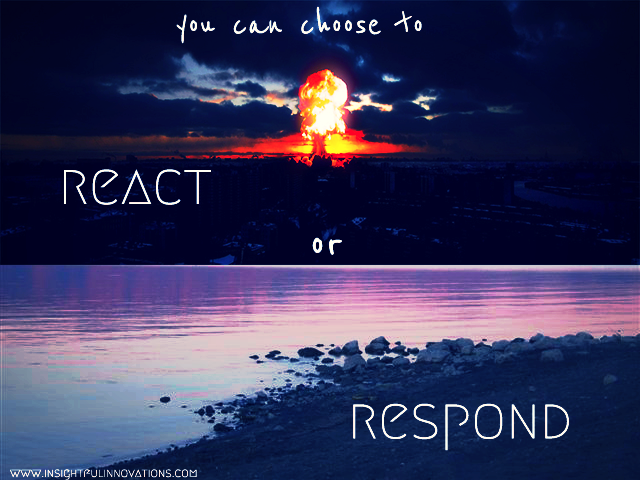
We need to decide to observe the data…today….right now…this moment. Then we decide how to respond. That way, you’re not operating out of your Knower/Judger’s past, which only leads to frustration and struggle.

It all starts with a decision. You can rock your world if you’ll look at the data and decide that your old rules don’t work anymore. The choice is yours. A decision or a reaction. Digital images or Kodachrome.


Share
Occupy This!

Occupy This!

“Men feared witches and burnt women. It is the function of speech to free men from the bondage of irrational fears.” — U.S. Supreme Court Justice Louis D. Brandeis (1856–1941), Whitney v. California, 274 U. S. 357 (1927)

I take no sides in the debate between those who are occupying Wall Street and those who think it is time for people to evacuate our downtowns—the anti-occupiers. But it seems to have degenerated into a debate for debate’s sake. What’s missing from this exchange is dialog—“the function of speech that frees men from the bondage of irrational fears.” Each side fears the other. The OWS groups fear the loss of their well-being at the hands of large corporations and banks. The opposition fears ongoing anarchy in the streets. And no one is communicating. There’s no one exploring the doubt, as I like to put it.

Hey, you OWS folks! Is it possible that large corporations are our economic engine, ensuring we still have a nation with a First Amendment right?

Hey, anti-OWS folks! Is it possible that the corporations and the banks have spun out of control in recent decades?

What you have here is two populations of Knower/Judgers squared off, doing battle for the sake of their positions (egos) versus seeking a solution. We see it daily in our normal lives. This is just that, but on steroids… and in front of TV cameras. It’s a weakness of the human condition. We lose track of the big picture—what is in the common best interest—in favor of winning the battle for our own emotional K/J needs.

Let’s diagram the conversation. First a group of concerned citizens exercises their constitutional right to speak their K/J minds. The people they’re speaking to generally ignore them from their own K/J position. And the rant is off and running.

Remember the idea that there’s no difference between the war over the toilet paper (which way it’s supposed to roll off) and terrorism (all Western infidels should die) based on our entrenched K/J filters? This is a clear example of that. What starts off as a constitutionally guaranteed right to protest and speak up comes up against a set of K/J rules—ignore them and they’ll go away. No meaningful conversation takes place. So the OWS K/J gets louder. And pretty soon it’s not about the corporations and the banks anymore… it’s about the poor downtrodden OWSers being taken to task by the control freak anti-OWSers. Then the OWSers get reinforcements—people more schooled in this game of escalation—and then the anti-OWSers bring out the cops and the clubs and the whole message is lost.

Actually, if you think about it, our entire American Revolution started about the same way. Lexington and Concord. Small confrontation got out of hand and the original negotiation was lost. Is that where this is headed? Would that be OK with your set of K/J rules?

I can’t help but think a good dose of Learner/Researcher poured over this protest would prevent the oncoming “burnt women,” yield lousy press, and produce actionable results. See? I really do want to save the planet one conversation at a time. 

Share
Someone Left the Cake Out in the Rain

Someone Left the Cake Out in the Rain

As I write this, hundreds, if not thousands, of U.S. citizens are voicing their displeasure about conditions—mostly economic—by “occupying” Wall Street and other iconic sites. This action appears to be a manifestation of a growing frustration with how things have changed since the economic meltdown of 2008. I’m expecting that the anger toward Wall Street will soon spread—to banks, businesses, the paperboy, and the Edward Jones rep. But who’s really responsible for our misery? We are.

“Someone left the cake out in the rain” is a line from the song “MacArthur Park.” Jimmy Webb wrote the lyrics as he suffered the pain of a breakup with Susan Ronstadt, Linda’s cousin. For me, it’s taken 40 years to encounter a situation that explains those lyrics.

In 2007, unemployment was 5%, the market was yielding 10% annually like clockwork, and housing was growing at 7% per year. We all acted like wide-eyed kids in a bakery, each wanting a bigger piece of that ever-growing cake.

And then someone left the cake out in the rain and it was all over. But do we really expect a magic pill? A switch our leaders can pull that will take us back to 2007?

The “Occupy” protesters are eerily reminiscent of the hippies of the ’60s who occupied MacArthur Park in L.A., Central Park in Manhattan, Haight-Ashbury in San Francisco, and any other public place to exhibit their frustration. “I don’t think that I can take it,” is another line from the song. The Occupiers are saying the same thing.

We just want to go back to the way it was before. The conditions of the boom years 2004–2007 were created, at least in part, by a long-term “adjustment” to the economic engine. Institutions were created to help build the American dream for everyone by loosening requirements for home loans and student financing. Owning a home and completing a college education became possibilities. “’Cause it took so long to bake it.”

And now it’s over. Sweet green icing flowing down.” Hindsight usually being 20/20, the addiction to ever-growing equity on a debt that someone down the road was going to have to pay was just too much for the regulators, a recipe for disaster. “And I’ll never have that recipe again…”

So here we are. Smack in the middle of national and global upheaval, still anticipating Christmas as usual. The list of unmet Knower/Judger expectations is long:

  • Continued prosperity with no observed cost
  • Regulators who protect us
  • Legislators who understand common citizen pain
  • American enterprise free to pursue goals and dreams
  • A plan for caring for our weakest members
  • Terrorists kept from our doors with no loss in civil liberties
  • Bad guys shot down and good guys wearing white hats

Jimmy lost Susan and wrote a song about losing something wonderful. We’ve lost our loves, too. Good roads and safe bridges. Innocent honesty. Five percent unemployment, 15% investment returns, a 15,000 Dow Jones Industrial Average, and $1.09 gasoline. But instead of blaming everyone else and insisting that we get these things back, we can take a different approach.

It’s time to move on. Let’s get into our Learner/Researchers and manage our expectations. Let’s explore the data, let go of the past, and figure out where we go from here.

Share
I’m so Pissed

I’m so Pissed

So Pissed CarEver have one of those days, when it seems the universe has it in for you? Well I have a little secret that can help you get over that feeling and actually change the situation. Hint: It’s not the universe that’s responsible.

Pogo was accurate when he said “We have met the enemy and he is us.”

Sure, stuff happens. But, as Lou Holtz (famous football coach and motivational speaker), tells us: “Life is 10 percent what happens to you and 90 percent how you respond to it.”

Most of us have experienced the “chain reaction” bad luck sequence. It’s the foundation of much movie humor. The heroine is ordered to go out and buy coffee for the meeting. At the coffee shop, she finds that her credit card is maxed out. Looking for change, she inadvertently empties the contents onto the floor then finds she doesn’t have enough cash for all five coffees. She skips her coffee. On the way back to the office, her heel sticks in a grate, causing her to stumble and spill three coffees down her new Armani suit. Disheveled and wet, she limps into the meeting, gives her boss the remaining coffee, and hears him ask, “Cream?”

Yeah. We’ve all had those days.

The good news is that getting through those days only takes two things:

  • Recognizing that you’re in the downward spiral
  • Deciding to get out of it

Here’s your plan:

When the first incident occurs that causes you to exclaim, “I’m so pissed!” prepare for what happens next. Look around for the next bad luck attack. If it doesn’t come, then this is just an isolated case of no statistical significance. But if the next thing that hits causes you to say, “Now I’m really pissed,” you’re headed for a negative adventure. It’s like watery eyes predicting you’re headed for a full-blown sinus attack. It’s a signal!

Viktor Frankl’s famous quote comes to mind: “Between stimulus and response there is a space. In that space is our power to choose our response. In our response lies our growth and our freedom.”

A real-life example

Some years ago, my wife and I were headed on vacation. The day of our flight, I had to drop the dogs at the kennel, pick up my wife at her office, and drive us to the airport. Oh, and arrange our seats. I planned to negotiate with American Airlines en route.

I had it all timed out. I loaded up the boys and headed for the puppy camp office. Sign on the door: Closed Wednesdays. And then it started to rain. I would now have to drive 27 miles to the actual kennel down I-44, and I certainly had not accounted for that in my time estimate. I’m so pissed.

Slamming the car into gear and dialing my wife’s office to inform her of this ridiculous situation, I raced through our little town. I crested a little rise on wet Elm Avenue only to mate with a stopped pickup truck. Nailed him. Dogs ended up in the front seat. My hood and front grill were crushed on his hitch ball, but he insisted on taking all insurance papers and so on. Now I’m really, really pissed. How could this get any worse?

As I pulled onto the interstate, I noticed the damaged hood bobbing slightly. That was the stimulus. I took a deep breath (space), pulled over, and thought rationally about what needed to be done to avoid something else happening. Check the hood. The hood was unlatched and would have flown up over my windshield had I continued. In 15 seconds, I had interrupted my run of bad luck.

As a rally co-driver, I had the skills to figure out how much time it would take to drop the boys, get back to my wife’s office, and get to the airport, and how fast I needed to go. I upped the speed and dialed American Airlines. I was in super efficiency mode now! Making a long story short, we made it to the plane (barely) and had a wonderful week in Colorado.

This incident hatched the above-mentioned plan. Since then, in the downward spiral of a bad luck sequence, the second issue becomes my stimulus. I choose that there not be a third. That’s a conscious decision. That’s the 90 percent “how you respond.”

Try it, and let me know how it works for you.


Share

Corporate CoDriver: Why can’t they just (add change needed here)?

I’ve been working with guys (yes these are all guys) recently who seem to want to change important people in their lives.  Perhaps it’s just that they have developed more clarity themselves recently.  Maybe they’ve seen and are working on behavior patterns of their own that don’t serve them well and are eager to see others follow suit.

I’ve found that the only person I can affect any changes to is ME.  And while it may be frustrating (letting our expectations run wild) to see others struggle, only by altering me and how I relate to the others am I able to change that interaction.

A metaphor I developed to explain why this “change my partner, kid, spouse” concept is usually unproductive is the golf swing.

We are the golfer.  The other person is the golf ball.  We set the ball on the tee (or it’s already in the fairway, rough, or sand) and we cannot touch it.  A cardinal rule in golf, and so it seems in life, would be to “hit it where it lies”.  The only thing we can do is construct our swing to get the best results out of the situation.  If it does not produce the desired result, then next time we can vary the process and adjust the swing so something different happens.

Once the ball leaves the club head (based on our swing, not the ball’s behavior patterns or even wishes), it’s going to go where the physics take it.  If we have a consistent slice, we simply cannot hold the ball responsible.  Our swing is responsible.  WE ARE RESPONSIBLE.  Change the swing (us) and the ball (he or she) will behave differently.

Share
Change Everything in a Moment

Change Everything in a Moment

If you move a rock in a stream, everything downstream changes forever.

Do you remember the first time you drummed up the courage to kiss your girlfriend or boyfriend? Everything changed, right? How about the first time you moved over to the driver’s side of the car and took the wheel? The first time you raised your hand in class? The time you decided to quit that job or take that ballroom dancing class? In just one moment, you changed your life, and you can do it again whenever you like.

I’ve been reminded several times this past week of Zig Ziglar’s famous saying from Yazoo City, Mississippi: “If you keep a doin’ what ya been doin’, ya just keep a getting’ what ya been gettin’.”

Your Knower/Judger is charged with the responsibility of making sure you “keep a doin’ what ya been doin’.” It’s the keeper of the status quo…good or bad…right or wrong. It exercises great control over your behaviors to keep you in your comfort zone, minimizing risk and helping you get through life with minimum disruption—and keeping you from making the changes you want to make.

But if you look at your life as a young person, you’ll see many examples of times when you broke your K/J rules. You may have been experimenting, or perhaps peer pressure helped you move into your Learner/Researcher. You were nervous, uncertain, adventurous, and you moved that rock. And everything downstream was forever altered.

The older and more entrenched our K/Js get, the less likely we are to take the risk of breaking those rules of life, so we “keep a gettin’ what we been a gettin’.” This affects all aspects of our lives.

Consider the following example. I recently coached an executive team, and one VP had a record of trumping every situation with his K/J arguments. He just had to be right even though he usually wasn’t right. His direct reports were tiring of the ongoing harangues and time-consuming debates. They felt they had to fight the good fight and push back against the VP’s very real ignorance. It wasn’t working. The harder they fought, the firmer he dug in. K/J versus K/J, and my K/J is bigger than your K/J!

In a moment of L/R clarity, one of his direct reports told Mr. Boss he was absolutely right. Voilà! End of argument.

You might think that this left the issue unresolved, but no. Since the K/J versus K/J fight was over, Mr. Boss no longer had to win anything—he’d already won. Within minutes, the two were looking at the data that disproved Mr. Boss’s stand, so Mr. Boss could make a valid decision. Everyone was satisfied, and the whole transaction took about five minutes.

Just a moment of abandoning your K/J rules will change everything downstream.

Your assignment for June: Engage in some repetitive interaction that always seems to go a certain way, and don’t play your part. Tell her she’s right. Take a different route to work. Take up ballroom dancing. Move the rock.

Share